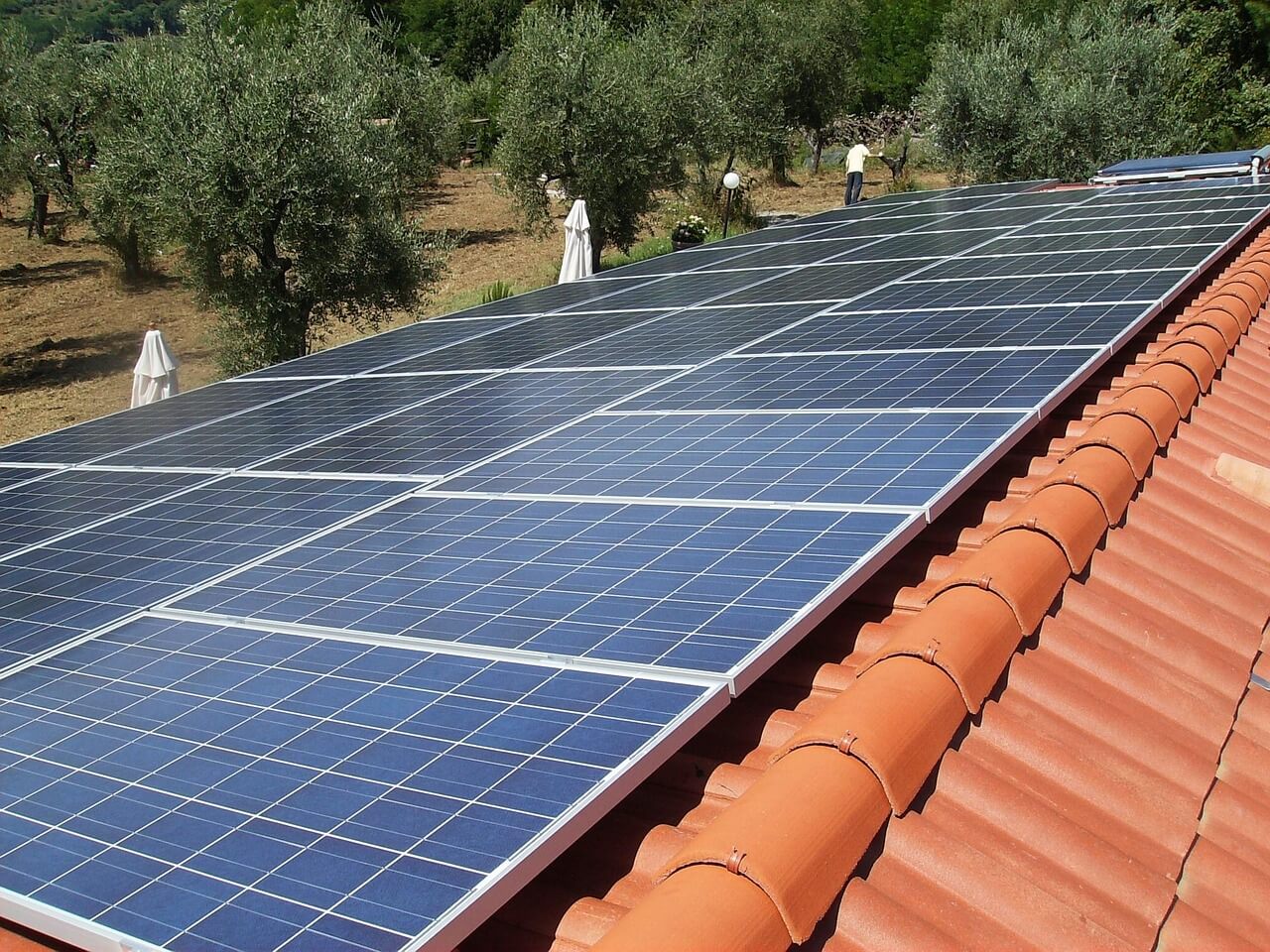
Europe is looking to introduce "Forced Labor Act", how will this impact the export of Chinese PV modules?

Published: Nov 6, 2023 14:41
Source: SMM
Recent upheaval in the European photovoltaic market has left many Chinese PV modules stranded at ports and prices dropping, worrying local manufacturers.

Recent upheaval in the European photovoltaic market has left many Chinese PV modules stranded at ports and prices dropping, worrying local manufacturers. The debate is ongoing over whether it is necessary to impose restrictions on imports of Chinese PV modules. The ESMC has requested EU legislation against forced labor in the PV industry and prevent products produced through forced labor from entering the European market, yet no new evidence suggests its use in Xinjiang's PV industry.

On October 16, 2023, the European Parliament's Internal Market and International Trade Committee approved a revised proposal for EU's 'Regulation Banning Forced Labor Products'. This ban aims to cover all stages of manufacturing production and is not specifically targeted at specific companies or industries, mirrors the U.S.'s UFLPA, requiring businesses in high-risk areas to ensure no forced labor in their supply chains. Products suspected of forced labor involvement already in the EU market will be "donated", "recycled", or "destroyed".

The European Parliament's proposed regulation, seemingly addressing forced labor, may target imports of Chinese PV module. Still unapproved, it could take 18 months to implement. If enacted, this could significantly impact Chinese PV products' market share in Europe, introducing risk and uncertainty for PV module exports.

The Forced Labor Act could restrict Chinese PV module exports, affecting both markets. When the U.S. introduced the UFLPA, companies on the "Entity List" like Hoshine, Daquan, GCL-Poly, and East Hope expanded polysilicon production outside Xinjiang. Hence, Chinese PV module companies can still export if they adjust supply chains, establish traceability for raw materials, and manage export restriction risks.

China dominates over 80% of global PV module capacity. Europe, highly reliant on Chinese PV products, accounts for nearly 60% of China's annual PV module exports, making it the largest and fastest-growing export market of Chinese PV modules. Disruptions to Chinese PV product exports could cause supply shortages, increase prices, slow renewable energy transition, and risk another European energy crisis. The Forced Labor Act might raise PV product costs and export cycles, but due to Chinese PV products' competitiveness, export volume impact may be limited.

Data Source Statement: Except for publicly available information, all other data are processed by SMM based on publicly available information, market communication, and relying on SMM‘s internal database model. They are for reference only and do not constitute decision-making recommendations.

For any inquiries or to learn more information, please contact: lemonzhao@smm.cn
For more information on how to access our research reports, please contact:service.en@smm.cn
Related News
[SMM PV News] Africa Renewable Roundup: 'AfDB' Backs Off-Grid & Floating Solar, Mega Projects Online
1 hour ago
[SMM PV News] Africa Renewable Roundup: 'AfDB' Backs Off-Grid & Floating Solar, Mega Projects Online
Read More
[SMM PV News] Africa Renewable Roundup: 'AfDB' Backs Off-Grid & Floating Solar, Mega Projects Online
[SMM PV News] Africa Renewable Roundup: 'AfDB' Backs Off-Grid & Floating Solar, Mega Projects Online
Recent renewable energy developments are accelerating across Africa. The African Development Bank ('AfDB') approved a $5.65 million grant for a new Peace Renewable Energy Certificate aggregation facility to support 71 MW of off-grid renewables in 14 fragile states. In Mozambique, the 'AfDB' also approved $150 million for what will be Africa's largest floating solar project on Cahora Bassa Lake. Meanwhile, Zambia announced a 'PPA' for a 100 MW wind-solar hybrid project between DZGM Energy Resources and Zesco. In Tunisia, Japan's 'JCM' is supporting a 130 MW solar facility built by Marubeni and Voltalia. Finally, in South Africa, Envusa Energy launched commercial operations at the 240 MW Mooi Plaats solar project to supply renewable electricity to local mining operations.
1 hour ago
[SMM PV News] RayGen Deploys 1 MW Solar and Thermal Storage System in Brazil
5 hours ago
[SMM PV News] RayGen Deploys 1 MW Solar and Thermal Storage System in Brazil
Read More
[SMM PV News] RayGen Deploys 1 MW Solar and Thermal Storage System in Brazil
[SMM PV News] RayGen Deploys 1 MW Solar and Thermal Storage System in Brazil
Melbourne-based RayGen has fully commissioned a 1 MW concentrated solar and long-duration thermal energy storage system in Petrolina, Brazil, in partnership with Axia Energia. The facility utilizes RayGen's 'PV Ultra' technology, which uses mirrors to concentrate sunlight onto modules while capturing heat in a water-based storage system. This design achieves a 70% round-trip efficiency. Axia is testing the technology for potential large-scale deployment to help power 'AI factories.' RayGen already operates a commercial facility in Australia and is currently advancing a 200 MW/1,200 MWh utility-scale project in South Australia.
5 hours ago
[SMM PV News] JinkoSolar Terminates Vietnam Solar Cell Project Amid 'US' Tariffs
5 hours ago
[SMM PV News] JinkoSolar Terminates Vietnam Solar Cell Project Amid 'US' Tariffs
Read More
[SMM PV News] JinkoSolar Terminates Vietnam Solar Cell Project Amid 'US' Tariffs
[SMM PV News] JinkoSolar Terminates Vietnam Solar Cell Project Amid 'US' Tariffs
JinkoSolar's Hai Ha solar cell project in Vietnam was officially terminated on March 11 following the company's request to halt development. The facility, originally planned for 4 GW of cell and 3 GW of module capacity with a revised investment of $294.2 million, had its investment certificate revoked. The decision was primarily driven by the 'US' Department of Commerce imposing steep antidumping duties (over 120%) on Vietnamese 'PV' cells in June 2025, worsening the economics of exporting. Despite this cancellation, JinkoSolar is not fully withdrawing from Vietnam and maintains around 10 GW of integrated n-type capacity. The company is reportedly pivoting its global strategy toward other markets like the Middle East and the wider Asia-Pacific region.
5 hours ago
Europe is looking to introduce "Forced Labor Act", how will this impact the export of Chinese PV modules? - Shanghai Metals Market (SMM)